

A triangular book graph  consists of
 triangles sharing
one common graph edge. Equivalently, it is the graph
join
 of a complete graph on two vertices
and an empty graph on
 vertices. It has
 vertices and
 edges. This is the book graph
of the Ramsey number literature, distinct from the
book graph
 formed from squares (Rousseau and Sheehan
1978).
For these triangular books,  is the least
 such that every red-blue edge
coloring of
 contains a red
 or a blue
 .
Chung and Wesley (2026) proved
 |
whenever  or
 is the order of a conference graph. In particular,
either number may be a prime power congruent to 1
modulo 4. They also proved the equality when
 for a prime power
 with
 , and when
 for a prime power
 with
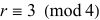 . Chung and Wesley (2026) report that an AI system
assisted in discovering several of these constructions.
