


The Narayana cow sequence, named after the 14th-century Indian mathematician Narayana Pandita (Lin 2021), counts the cows in a herd that begins with one cow in the first
year and in which each cow gives birth to one calf a year from the age of three onwards.
The sequence for years  , 2, ... then gives 1, 1, 1 + 1 cow born = 2, 2 + 1 cow born
= 3, 3 + 1 cow born = 4, 4 + 2 cows born = 6, and so on. Continuing gives the sequence 1, 1, 2, 3, 4, 6, 9, 13, 19, 28, 41, 60, ... (OEIS
A000930).
The  th
Narayana cow number
 gives the number of compositions
of a positive integer
 involving only 1 and 3, the first few of which are shown in
the following table.
 |  | compositions of  using 1 and 3 |
| 1 | 1 | 1 |
| 2 | 1 |  |
| 3 | 2 | 3,  |
| 4 | 3 |  ,  ,  |
| 5 | 4 |  ,  ,  ,  |
| 6 | 6 |  ,  ,  ,  ,  ,  |
Based on its definition, the Narayana cow sequence is evidently related to both the Fibonacci sequence and Padovan sequence.
The terms of the sequence are given by the linear recurrence equation
 |
(1)
|
for  ,
with
 ,
 ,
and
 .
They have generating function
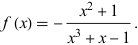 |
(2)
|
They also have a closed form in terms of a generalized hypergeometric function
 |
(3)
|
The limit of ratios of consecutive terms is the supergolden ratio
 |
(4)
|

 ,
 ,
 ,
 ." Mar. 7, 2019.