TOPICS
Search

Dyadic Triangular Hilbert Form


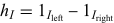
The dyadic triangular Hilbert form is a model of the triangular Hilbert transform built from dyadic intervals and Haar functions. For k in Z, let D_k consist of the half-open intervals [2^kn,2^k(n+1)), with nonnegative integer index n. For I in D_k, write n_I for its index and h_I=1_(I_(left))-1_(I_(right)), using the characteristic functions of its two halves. The admissible triples satisfy n_(I_0) direct sum n_(I_1) direct sum n_(I_2)=0, where  direct sum is bitwise exclusive disjunction, so addition is performed in binary without carries. For such a triple define


 L_(I_0,I_1,I_2)(F_0,F_1,F_2)=2^(-k)int_(I_0×I_1×I_2)F_0(x_0,x_1)F_1(x_1,x_2)F_2(x_2,x_0)product_(v=0)^2h_(I_v)(x_v)dx_0dx_1dx_2.

See also

Exclusive Or, Haar Function, Triangular Hilbert Transform

Explore with Wolfram|Alpha

References

Kovač, V.; Thiele, C.; and Zorin-Kranich, P. "Dyadic Triangular Hilbert Transform of Two General Functions and One Not Too General Function." Forum Math. Sigma 3, e25, 2015. https://doi.org/10.1017/fms.2015.25.

Cite this as:

Weisstein, Eric W. "Dyadic Triangular Hilbert Form." From MathWorld--A Wolfram Resource. https://mathworld.wolfram.com/DyadicTriangularHilbertForm.html

Subject classifications