

The two-sample  -test
compares the means of two independent populations
using two independent random samples. Welch's form of the test uses
-test
compares the means of two independent populations
using two independent random samples. Welch's form of the test uses
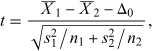 |
where  is the difference under the null hypothesis, and
approximates the null distribution using the Welch-Satterthwaite degrees of freedom.
is the difference under the null hypothesis, and
approximates the null distribution using the Welch-Satterthwaite degrees of freedom.
When the two population variances are assumed equal, the pooled two-sample  -test
replaces the denominator by one formed from the pooled
variance. The paired t-test is different:
it applies a one-sample test to paired differences rather than treating the two samples
as independent.
-test
replaces the denominator by one formed from the pooled
variance. The paired t-test is different:
it applies a one-sample test to paired differences rather than treating the two samples
as independent.
