

An irrationality sequence is a sequence of positive integers  such that
 converges
to an irrational number for every sequence
 of positive
integers. Erdős (1975, pp. 6-7) showed that the sequence
 , whose terms for
 , 1, 2, ... are 2, 4, 16, 256, 65536, ... (OEIS A001146), is an irrationality sequence (Guy 1994,
p. 225).
A different definition is used in Erdős problem 263 (Bloom 2026). It requires a strictly increasing
sequence of positive integers  such that
 |
converges to an irrational number for every sequence of positive
integers  with
 . Thus the perturbations are asymptotically
equivalent denominators, rather than arbitrary positive
integer multiples of the original denominators. Whether
 has this different property remains open.
Price (2026) reported a strictly increasing sequence with the latter property but with
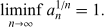 |
Here  denotes the limit inferior. This answers negatively
the question whether all such sequences must satisfy
 . The construction concatenates suitably
separated blocks of consecutive integers. Price (2026)
attributes the argument to GPT-5.5 Pro and reports an Aristotle Lean formalization.
