

The Hirschman uncertainty principle is a differential entropy inequality for a function and its Fourier transform. With the unitary Fourier transform convention
 |
(1)
|
let  be integrable with
 . Then
 and
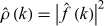 are probability
density functions. Here
 denotes the squared absolute
value of
 , not the Fourier transform
of
 .
Define the differential entropy, in nats, by
 |
(2)
|
with  .
When both differential entropies are finite,
the sharp inequality is
 |
(3)
|
Equality holds for the Gaussian function  ,
and for its translations, modulations, and nonzero dilations after normalization.
Hirschman (1957) proved the weaker lower bound  in this convention and conjectured the sharp lower bound.
The sharp inequality was proved independently by Beckner
(1975) and Białynicki-Birula and Mycielski (1975), and is also called the Hirschman-Beckner
uncertainty principle. With the alternative Fourier
transform convention
 , the sharp lower
bound is
 instead. Specifying the Fourier
transform convention is therefore essential.
