

A finite multiple zeta value is an element of the quotient ring
 |
(1)
|
obtained from a truncated multiple harmonic sum modulo each prime (Kaneko 2019). Two sequences represent the same element when they differ at only finitely many primes. In the ascending summation convention,
 |
(2)
|
The indices are positive integers, and the weight is  . Reversing the index converts this convention
to the descending convention for ordinary multiple
zeta values.
Seki (2026a) proved that the weight- values for nonempty indices are spanned over
 by
 with
 and total weight
 , allowing
 .
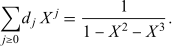
There are
 such generators for
 ,
where
 |
(3)
|
This proves the spanning assertion in Zhao's proposed basis, but does not establish linear independence. Even the existence of a nonzero finite multiple zeta value with nonempty index remains open. The corresponding spanning theorem for symmetric multiple zeta values was also proved by Seki (2026a).
Replacing  by
 defines
 and prime-power finite multiple zeta values. Write
 and let
 be the
 -span of
 with
 and index weight
 . For
 ,
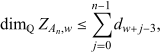
Seki (2026b) proved
 |
(4)
|
where  . For
 and
 ,
this space is already spanned by the unweighted values of index weight
 .
