Completing the square, also called completion of the square, is the geometric or algebraic operation that forms a square from a quadratic
polynomial.
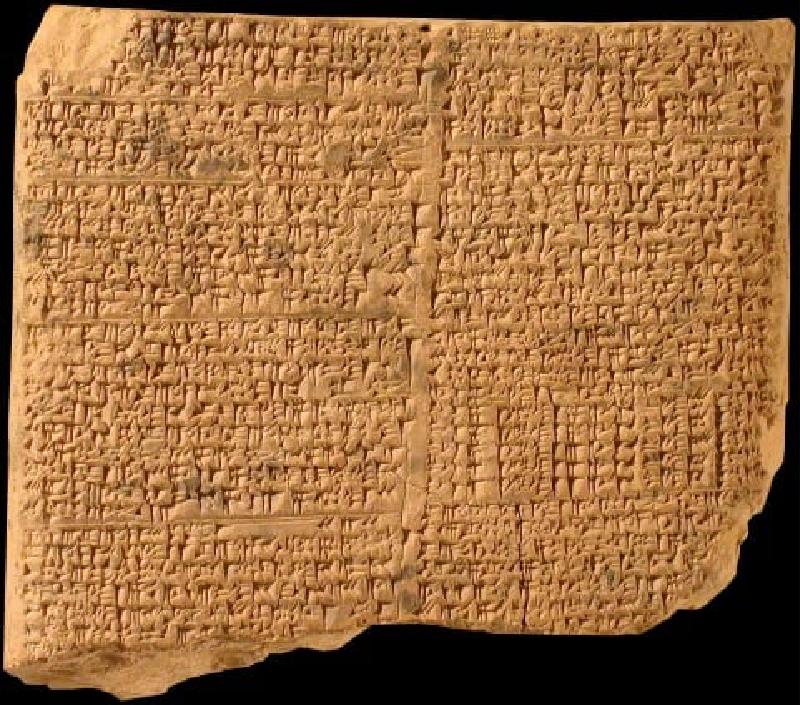
The Old Babylonian tablet MS 5112 shown above contains problems solved by metric-algebra transformations equivalent to completing the square (Friberg 2007).
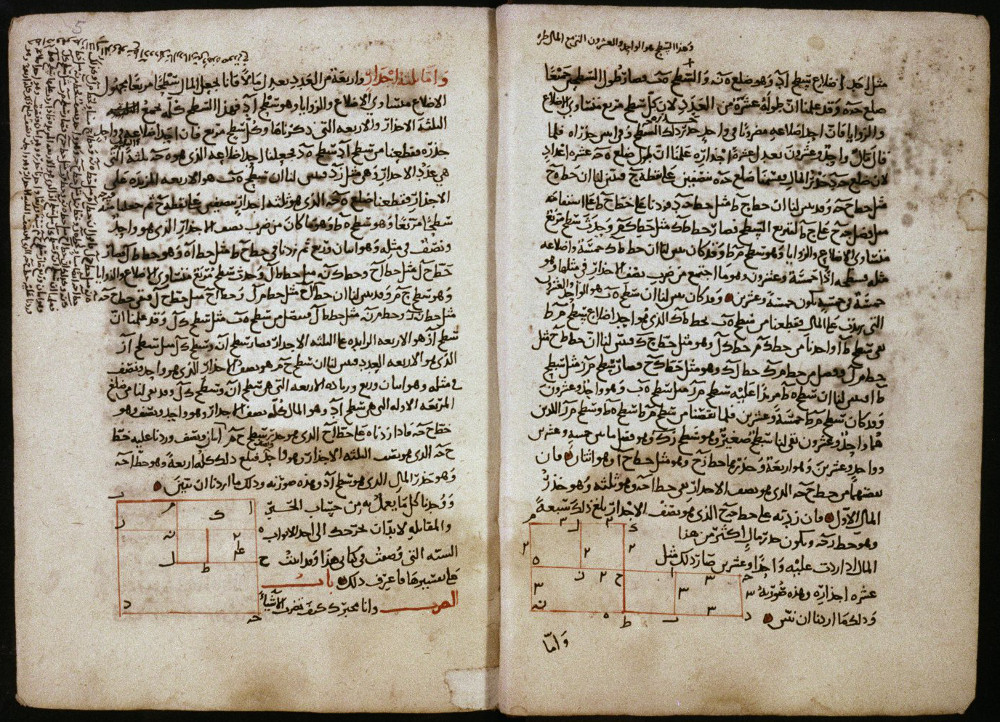
Al-Khwarizmi's ninth-century Al-jabr, represented above by a 1342 manuscript copy, solved quadratic equations using verbal
and geometric forms of this operation (Berggren 2007).
For example, the geometric construction illustrated above corresponds to al-Khwarizmi's "square
and ten roots equal 39," which in modern notation becomes
(3)
(4)
(5)
where only the positive root is admitted in the original geometrical setting. The added area completes the square of side (Berggren 2007).


 to the form
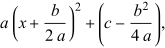
 and
and 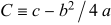 ,
simplifies to
,
simplifies to

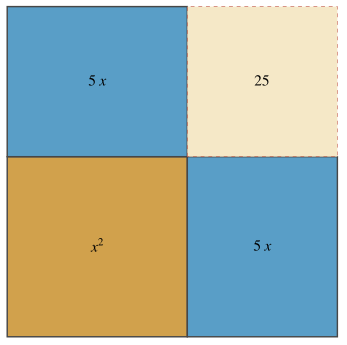


 completes the square of side
  (Berggren 2007).

