The Abel transform is an integral transform relating two functions
The Abel transform is used in calculating the radial mass distribution of galaxies (Binney and Tremaine 1987, p. 651; Arfken and Weber 2005, p. 1014) and inverting planetary radio occultation data to obtain atmospheric information as a function of height.
Bracewell (1999, p. 262) defines a slightly different form of the Abel transform given by
(4)
The following table gives a number of common Abel transform pairs (Bracewell 1999, p. 264), together with the exponential pair (Retana-Montenegro et al. 2012,
p. 7). Here,
(5)
where rectangle function , and
where Bessel function of the first kind
and Struve function .
Here, modified Bessel function
of the second kind , and the exponential pair has the limiting value incomplete
gamma function for the transforms of
See also Fourier Transform ,
Hilbert
Transform ,
Integral Equation
Explore with Wolfram|Alpha
References Abel, N. H. Oeuvres Completes Arfken, G. and Weber, H. J. Mathematical
Methods for Physicists, 6th ed. Binney, J. and Tremaine, S. Galactic
Dynamics. Bracewell,
R. The
Fourier Transform and Its Applications, 3rd ed. Dhar, B. K. "High-Accuracy Analytical Solutions for the
Projected Mass (Counts) and Surface Density (Brightness) of Einasto Profiles."
Mon. Not. R. Astron. Soc. 504 , 4583-4588, 2021a. https://doi.org/10.1093/mnras/stab1029 . Dhar,
B. K. "Erratum: High-Accuracy Analytical Solutions for the Projected Mass
(Counts) and Surface Density (Brightness) of Einasto Profiles." Mon. Not.
R. Astron. Soc. 505 , 5468, 2021b. https://doi.org/10.1093/mnras/stab1760 . Hilfer,
R. (Ed.). Applications
of Fractional Calculus in Physics. Liouville, J. "Memoire sur quelques quéstions de géométrie
et de mécanique, et sur un nouveau genre pour réspondre ces quéstions."
J. École Polytech. 13 , 1-69, 1832. Lützen,
J. Joseph
Liouville, 1809-1882. Master of Pure and Applied Mathematics. Retana-Montenegro, E.; Van Hese, E.; Gentile, G.;
Baes, M.; and Frutos-Alfaro, F. "Analytical Properties of Einasto Dark Matter
Haloes." Astron. Astrophys. 540 , A70, 2012. https://doi.org/10.1051/0004-6361/201118543 . Whittaker,
E. T. and Robinson, G. The
Calculus of Observations: A Treatise on Numerical Mathematics, 4th ed. Referenced on Wolfram|Alpha Abel Transform
Cite this as:
Weisstein, Eric W. "Abel Transform." From
MathWorld https://mathworld.wolfram.com/AbelTransform.html
Subject classifications


 and
 . For
 , one convention
is


 is the rectangle function, and


 is a Bessel function of the first kind
and
 is a Struve function.


 ,


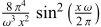

 is the modified Bessel function
of the second kind, and the exponential pair has the limiting value
 . Fitted approximations in terms of the incomplete
gamma function for the transforms of
 with
 and
 are given by Dhar (2021a, pp. 4586-4587;
2021b, p. 5468).
