

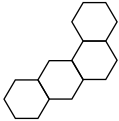
The worm polyhex is the 4-polyhex formed from an edge-to-edge chain in which three regular hexagons lie on one
lattice line and the fourth is attached to an end cell in a different lattice direction.
It is one of the seven 4-polyhexes when shapes that differ
only by translation, rotation,
or reflection are identified (Gardner 1978, p. 147).
Its cell-adjacency graph is the path graph  .
.
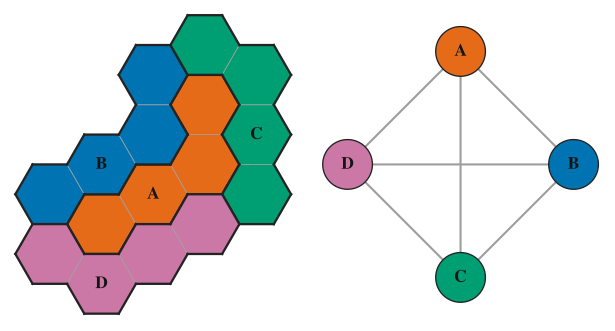
Scott Kim has observed that four worm polyhexes solve the puzzle of finding a non-three-colorable map with only four congruent countries, as long as no lakes are allowed (Gosper).
