


The Mondrian art problem asks for a dissection of an  square into at least two axis-aligned rectangles
with positive integer side lengths that minimizes the difference between the largest
and smallest areas. Here
 is an integer, and no two
rectangles may be congruent,
including after rotation (Pegg 2016; O'Kuhn and Slaughter
2026, p. 1).
For an admissible dissection  with rectangle areas
 ,
 ,
 , define its defect and the minimum
defect for the square by
 |  |  |
(1)
|
 |  |  |
(2)
|
where the minimum is over all admissible dissections.

The illustrated  square is dissected into 108 rectangles
with areas ranging from 9180 to 9324, giving defect 144
(E. Pegg, Jr., pers. comm., Oct. 22, 2026). Exact integer Cartesian coordinates verify that the pieces
have disjoint interiors, cover the square,
and have no pair that is congruent, including after
rotation. Thus the construction establishes the upper
bound
 |
(3)
|
without asserting optimality.
It remains unknown whether  for any
 (O'Kuhn and Slaughter 2026, p. 2). García-Colín
et al. (2024, p. 400) computationally excluded this possibility for
 .
Garrison et al. (2026, p. 3) proved that for all sufficiently large  ,
 |
(4)
|
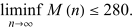
O'Kuhn and Slaughter (2026, p. 2) constructed seven-rectangle dissections with defect 280 for the integer sequence of side lengths defined by
 |
(5)
|
where  ,
 ,
and
 .
These side lengths satisfy
 and tend to infinity,
so
 |
(6)
|
This is an upper bound along a sequence, rather than a bound of 280 for every square. Their second
construction gives infinitely many multiples  of every fixed positive integer
 with
 (O'Kuhn and Slaughter 2026, p. 7).
