


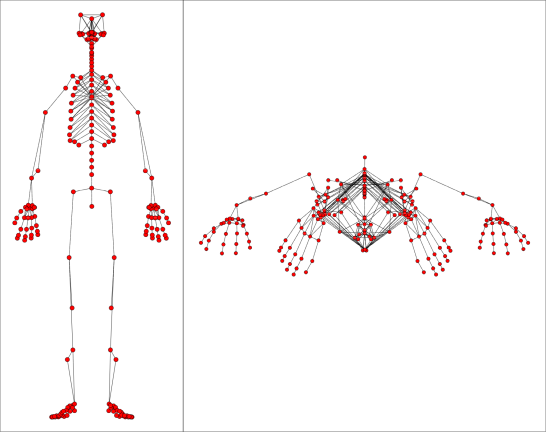
The human skeleton graph is a name given in this work to the graph obtained by connecting the 206 bones in the human body by an graph edge whenever bones are articulated. The resulting graph has 206 vertices, 342 edges, and 4 connected components.
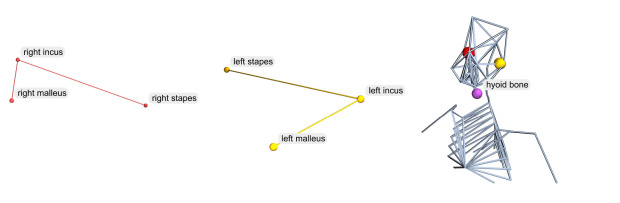
In addition to the main connected component of the skeleton, two components correspond to the left and right malleus-incus-stapes (hammer, anvil, stirrup), which are three tiny bones of the middle ear that form a chain that transmits and amplifies sound vibrations, and the last component to an isolated point that corresponds to the hyoid bone, which is a U-shaped bone in the neck that supports the tongue (and, as the human skeleton graph indicates) is unique in not being connected to any other bone.
The human skeleton graph will be implemented in a future version of the Wolfram Language as GraphData["HumanSkeletonGraph"]
