


|
|
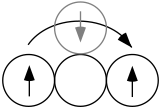
The coin paradox considers a circle of radius  that rolls without slipping around the
outside of a fixed circle of radius
that rolls without slipping around the
outside of a fixed circle of radius  . During one circuit, the center
of the rolling circle traverses a circumference
of length
. During one circuit, the center
of the rolling circle traverses a circumference
of length  .
Therefore, an observer in the plane sees
.
Therefore, an observer in the plane sees
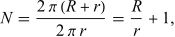 |
complete rotations. Rolling along the fixed circle accounts for  turns relative to the radius joining the two centers.
The direction of this radius itself makes one additional
turn.
turns relative to the radius joining the two centers.
The direction of this radius itself makes one additional
turn.
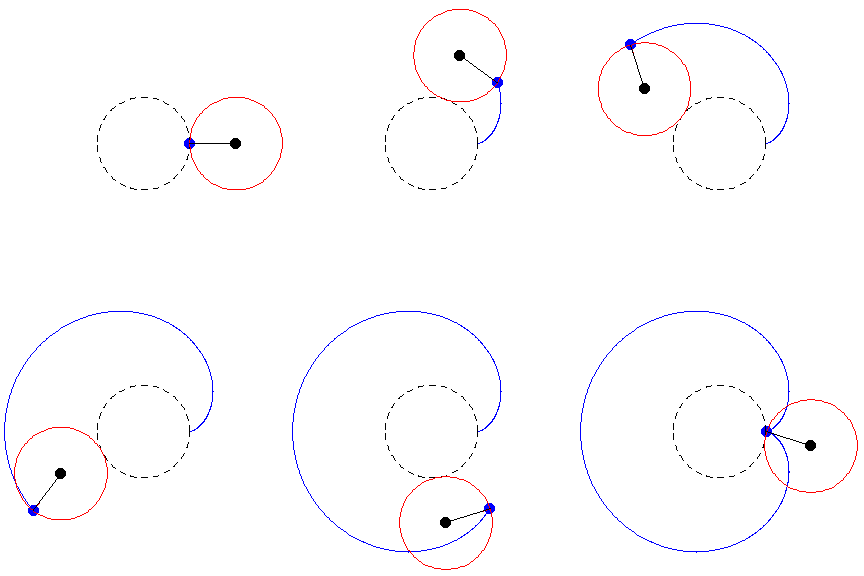
In the equal-radius case  ,
the rolling circle consequently makes two complete rotations. A marked point on it traces the cardioid
that is the equal-radius case of an epicycloid.
,
the rolling circle consequently makes two complete rotations. A marked point on it traces the cardioid
that is the equal-radius case of an epicycloid.
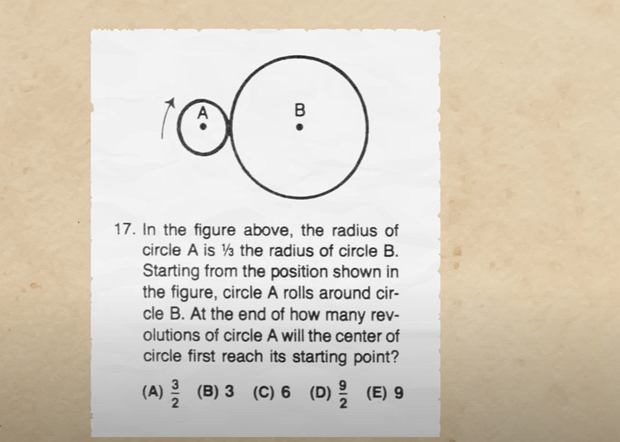
Question 17 on the May 1982 SAT used  and expected the answer 3. The correct count is instead
 , which was absent from the five choices.
Three of the approximately 300,000 students who took the test reported the error,
and the examinations were rescored (Murtagh 2023, Veritasium 2023).
, which was absent from the five choices.
Three of the approximately 300,000 students who took the test reported the error,
and the examinations were rescored (Murtagh 2023, Veritasium 2023).
